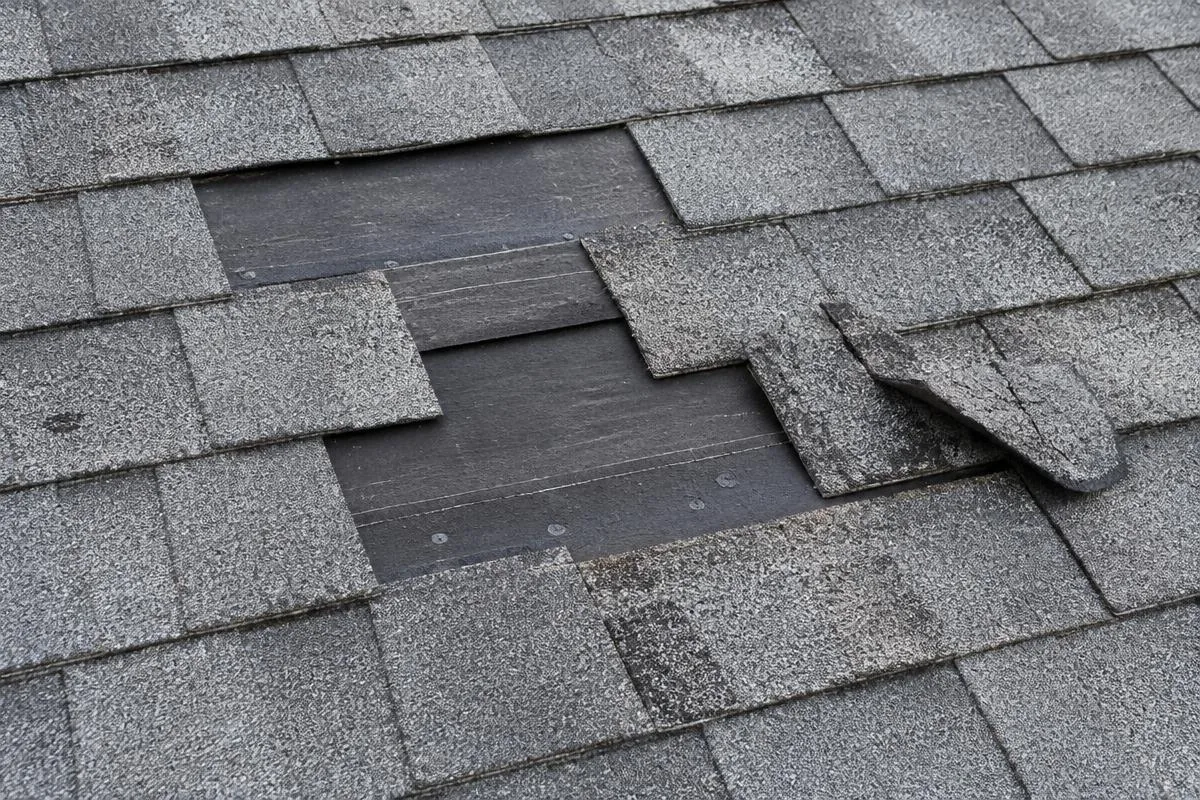
Missing or damaged shingles
Gaps and lifted edges can let rain reach the layers beneath the shingles. Underlayment is not a permanent substitute for intact roofing.
AI-generated educational illustration; not a completed project.
Wind damage
High winds can lift shingle edges, break the adhesive seal between courses, or tear shingles off entirely. Lifted shingles may lie back down and look fine while leaving a gap for wind-driven rain. Read more under shingle roof repair.
Hail and impact damage
Hail can bruise shingles, knock off granules and dent metal vents, gutters and flashing. Dents on soft metals and granules collecting at downspouts are clues worth noting.
Documenting damage
Photograph the roof from the ground, damaged gutters, fallen debris and any interior stains, with dates. Keep receipts for emergency measures. This helps any later conversation with your insurer; we cannot promise insurance approval or coverage.
Inspection after a storm
A professional roof inspection can identify damage that is hard to see, including issues at flashing and penetrations. Findings guide whether repair or replacement is reasonable.
Frequently asked questions
Does storm damage always require roof replacement?
No. Many storm-related problems are repairable. Extent of damage, roof age and overall condition determine the right approach.
Should roof damage be inspected after a storm?
It is a sensible step, especially after hail or high winds, because some damage is not visible from the ground and can lead to leaks later.
Will insurance pay for my roof?
That depends entirely on your policy and your insurer's assessment. We make no promises about insurance outcomes.