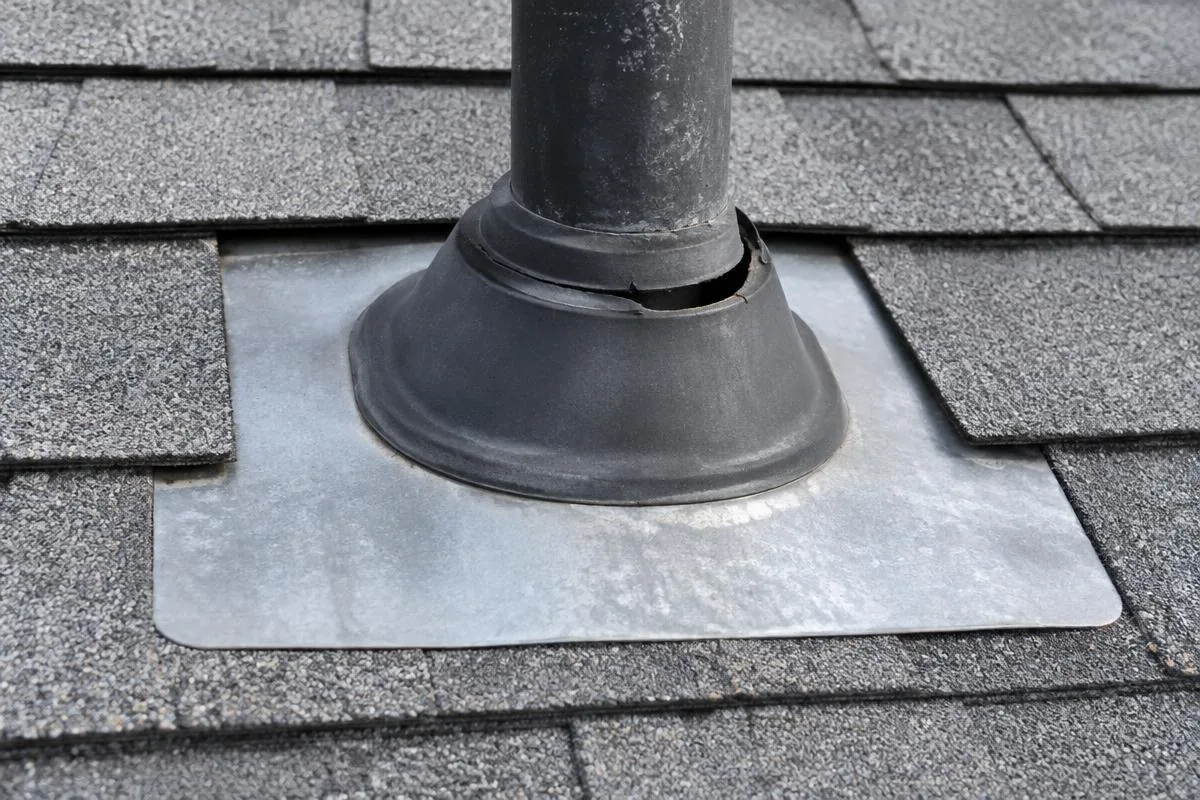
Cracked vent boots
A split around a vent pipe creates a possible water entry point even when nearby shingles look intact. Flashing and seals need inspection together.
AI-generated educational illustration; not a completed project.
Where flashing is used
Typical locations include:
- Chimneys (step and counter flashing)
- Roof-to-wall intersections
- Skylights
- Plumbing vent pipes and exhaust vents
- Roof valleys and drip edges
Why flashing fails
Sealants dry and crack with Texas heat, metal can corrode or loosen, and rubber pipe boots split with age. Improper installation and storm impacts can also open gaps.
Vent and valley leaks
Cracked vent boots are a common cause of small, persistent leaks. Valleys carry a large volume of water, so any flaw there shows up quickly. Pinpointing the exact source is covered in roof leak detection.
Frequently asked questions
Why does a roof leak around flashing?
Flashing seals transitions. When sealant fails, metal loosens or a boot cracks, water can slip behind it and into the structure.
Can flashing be repaired without replacing shingles?
Sometimes, though nearby shingles may need to be lifted or replaced to reach and correctly install flashing.
Is caulk alone a good fix?
Sealant can be a short-term measure, but lasting repairs usually involve properly installed flashing.