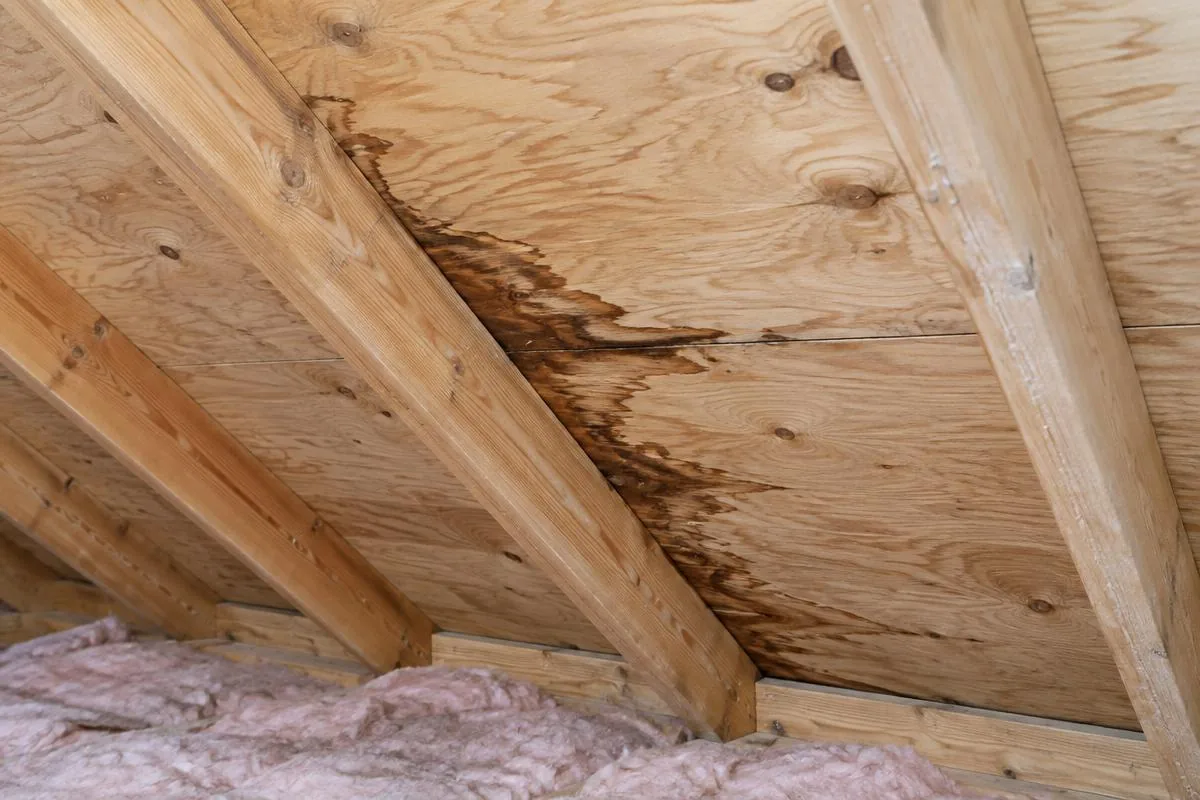
Water stains in the attic
Stained decking can help an inspector trace water movement. A stain alone does not confirm an active roof leak or its exact source.
AI-generated educational illustration; not a completed project.
Why the stain can mislead
Water follows the path of least resistance. It may enter near a vent or chimney several feet uphill and run down framing before dripping onto drywall.
What an inspection looks at
Providers typically check:
- Roof penetrations: vents, pipes, skylights, chimneys
- Flashing at walls and valleys
- Missing, cracked or lifted shingles
- Attic signs such as wet insulation, stained decking or mold, when safe to access
- Gutter and drainage issues that cause backup
Attic observations you can make
If you can safely reach the attic with a flashlight during or after rain, note where moisture appears and photograph it. Step only on framing, never between joists. Share what you saw when you call.
From diagnosis to repair
Once the source is known, the repair may involve flashing, shingles or a broader roof repair.
Frequently asked questions
How can I identify the source of a roof leak?
Note where water appears, when it happens (heavy rain, wind direction), and check the attic if safe. A professional inspection traces the water path to the entry point.
Why does my roof only leak in certain storms?
Wind direction and rain intensity matter. Some openings only take on water when rain is driven sideways.
Can a leak come from something other than the roof?
Yes. HVAC condensation, plumbing and window issues can mimic roof leaks, which is why diagnosis comes first.