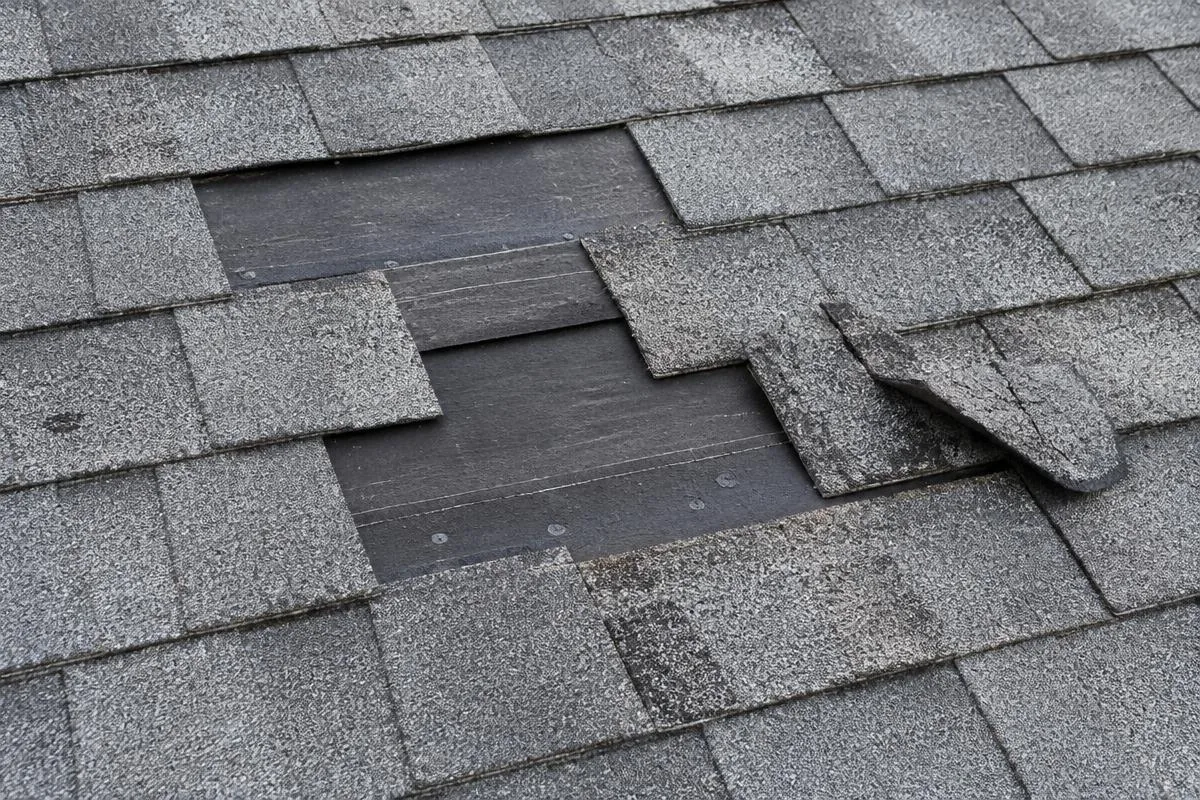
Missing or damaged shingles
Gaps and lifted edges can let rain reach the layers beneath the shingles. Underlayment is not a permanent substitute for intact roofing.
AI-generated educational illustration; not a completed project.
Common shingle problems
These are the issues homeowners most often notice:
- Missing shingles after wind events
- Cracked or split shingles
- Curling or cupping edges from heat and age
- Heavy granule loss, visible as bald spots or grit in gutters
- Exposed nail heads that have backed out
Exposed underlayment
Underlayment is a secondary barrier, not designed for long-term sun and weather exposure. When shingles are missing, it degrades faster and leaks become more likely.
Assess what is underneath
Replacing visible shingles without checking the deck can hide a bigger problem. Soft or stained decking should be evaluated. Where shingles meet walls or vents, the issue may actually be flashing. If the roof shows wear everywhere, compare with roof replacement.
Frequently asked questions
Can missing shingles cause a roof leak?
Yes. Missing shingles expose the underlayment and nail holes, and water can reach the roof deck, especially during wind-driven rain.
Will new shingles match my roof?
Exact matches can be difficult on older roofs due to weathering and discontinued products. A provider can discuss options.
Are curling shingles a problem?
Curling often indicates aging or ventilation issues and can make shingles more vulnerable to wind.