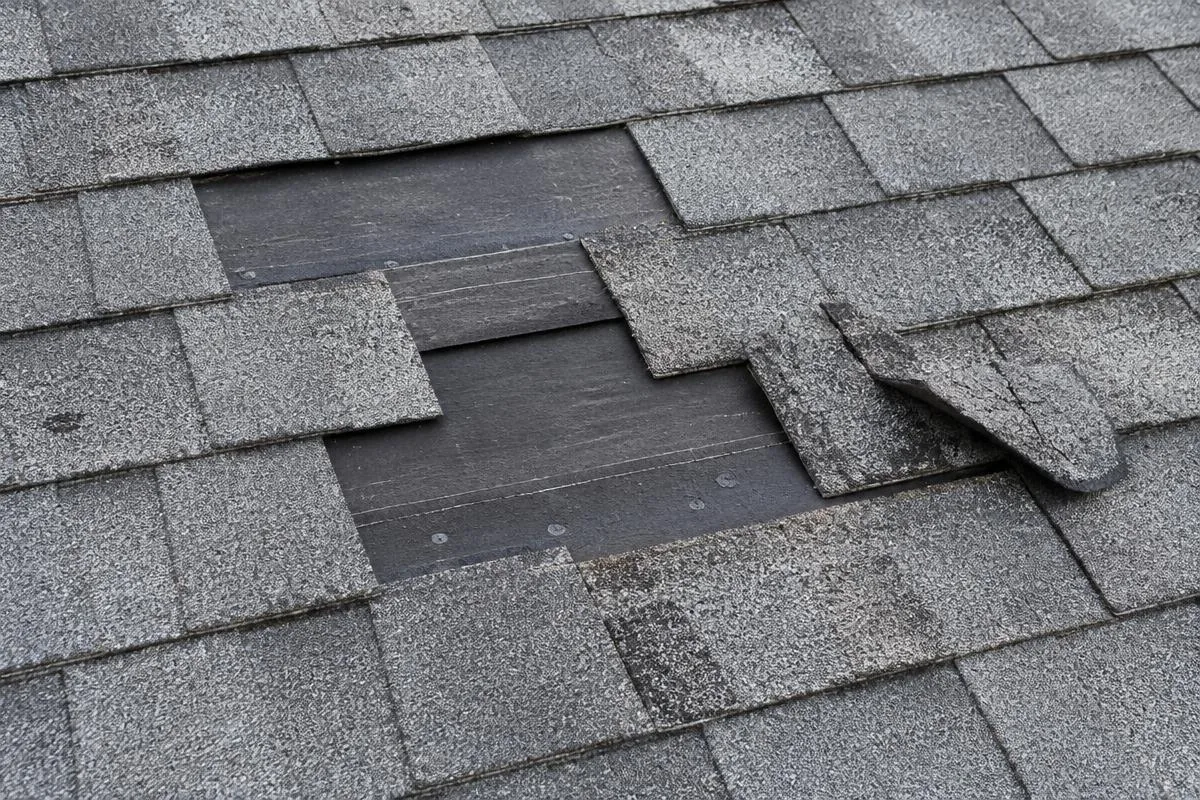
Missing or damaged shingles
Gaps and lifted edges can let rain reach the layers beneath the shingles. Underlayment is not a permanent substitute for intact roofing.
AI-generated educational illustration; not a completed project.
Damaged and missing shingles
Asphalt shingles can crack, curl, lose granules or blow off in high winds. A single missing shingle exposes underlayment to sun and rain, and repeated exposure can let water reach the deck. Our shingle roof repair guide covers this in more detail.
Loose or displaced roofing materials
Ridge caps, drip edge, and trim can loosen over time or after a storm. Loose components may not leak immediately, but they create openings where wind-driven rain can enter.
Flashing and roof penetrations
Many leaks occur where the roof is interrupted: chimneys, walls, skylights, plumbing vents and exhaust fans. Sealants age and metal can separate. See roof flashing repair for how these transitions are typically handled.
Repair versus replacement
A localized problem on a roof that is otherwise in fair condition is often a repair candidate. Widespread wear, repeated leaks in different areas, or soft decking may point toward a larger project. A provider's roof inspection is the usual way to decide, and our roof replacement page lists the factors involved.
Frequently asked questions
Can a small area of a roof be repaired on its own?
Often, yes. If the damage is localized and the surrounding roof is sound, a targeted repair is common. Matching older shingles can be a challenge, which a provider can discuss with you.
How do I know whether my roof needs repair?
Watch for ceiling stains, missing or curled shingles, granules in gutters, or daylight in the attic. Any of these is worth having inspected.
What affects the cost of roof repair?
Roof pitch and height, materials, the extent of damage, access, and whether decking must be replaced all play a role. Pricing is set by the independent provider; we do not quote prices.